Source Visibility in Duplicate Screening
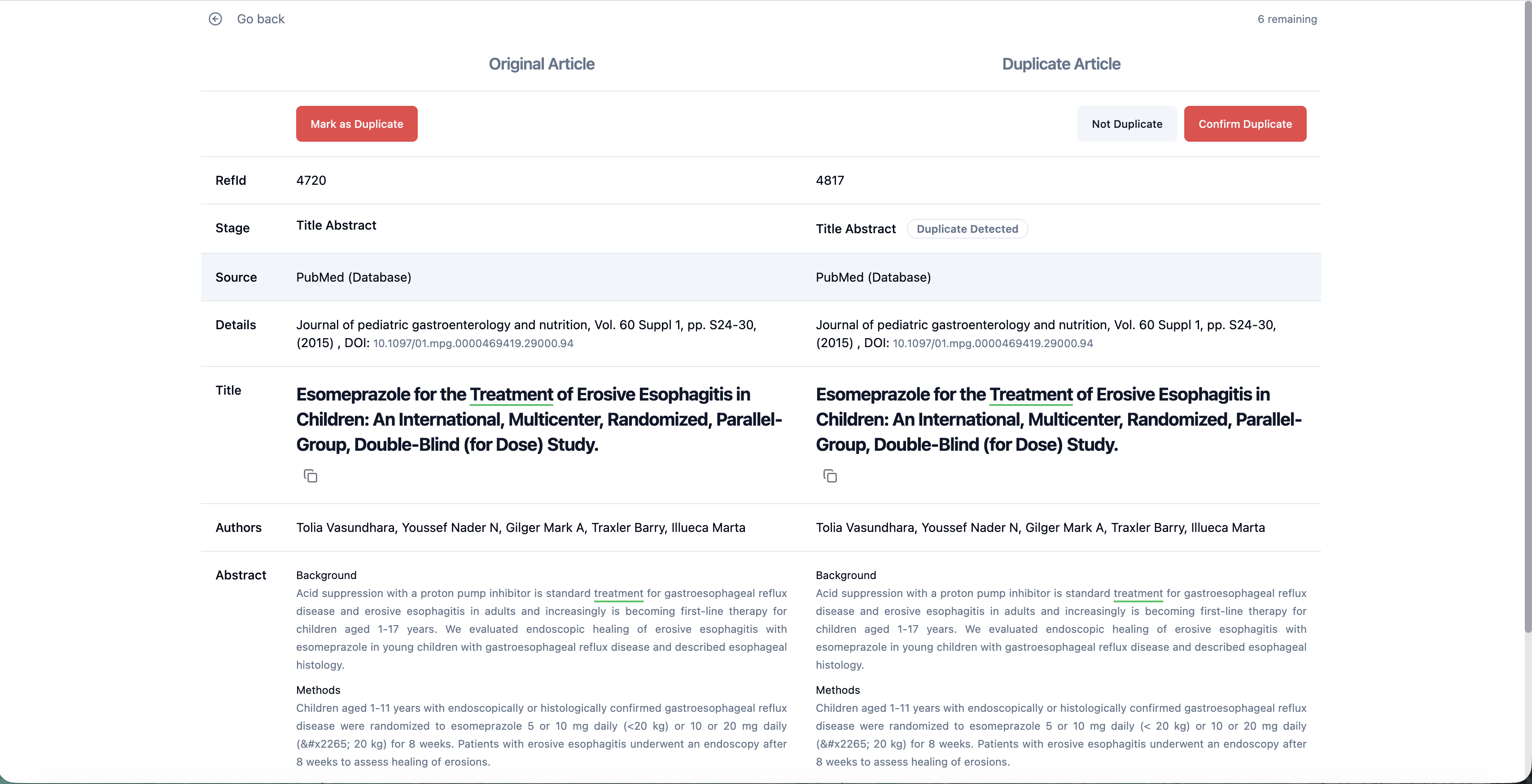
We've introduced a new enhancement to the Duplicate Screening workflow by displaying the Source associated with each record. This provides reviewers with greater visibility into where each citation originated, making duplicate resolution faster, more transparent, and better informed.
The source information is automatically mapped from the Source selected during citation file upload and is carried forward throughout the duplicate screening process.
What's New?
Source Information for Duplicate Records
Previously, duplicate records displayed citation details but did not indicate the database or source from which they were imported.
With this update, every duplicate record now displays its associated Source, allowing reviewers to quickly identify the origin of each citation during duplicate comparison.
The source is automatically populated based on the source selected when the citation file was uploaded into EasySLR.
Examples include:
PubMed
Embase
Scopus
Web of Science
OpenAlex
Other imported sources
Automatically Mapped During Import
When importing citations, users can specify the source of each file.
EasySLR now automatically preserves this information and displays it during Duplicate Screening without requiring any additional configuration.
This ensures citation provenance is maintained throughout the review workflow.
Why This Matters
Many systematic reviews involve importing citations from multiple literature databases.
During duplicate resolution, reviewers often need to understand where duplicate records originated before deciding which version to retain.
Displaying the upload source provides this context directly within the screening interface, eliminating the need to manually cross-reference imported files.
Better Duplicate Resolution
Source visibility enables reviewers to make more informed duplicate decisions by identifying:
Which databases contain the duplicate record
Whether the citation originates from a preferred or authoritative database
Duplicate records imported from multiple search sources
This additional context simplifies duplicate comparison and improves decision consistency.
Key Benefits
Improved Duplicate Review: Quickly identify the source database for every duplicate record during comparison.
Better Decision-Making: Retain records from preferred or authoritative databases while resolving duplicates.
Enhanced Traceability: Maintain complete visibility into citation provenance throughout the review process.
Reduced Manual Verification: Eliminate the need to revisit original imports to determine where a citation originated.
Summary
This enhancement provides reviewers with immediate access to citation source information during duplicate resolution.
By automatically carrying forward the upload source selected during citation import, EasySLR makes duplicate screening more transparent, efficient, and methodologically robust while preserving the provenance of imported literature throughout the evidence synthesis workflow.