Living Reviews Is Now Available in EasySLR
EasySLR now supports Living Reviews, helping teams continuously monitor emerging research and update existing literature reviews without manually rerunning searches or importing new citations.
Living Search allows you to schedule a recurring search within an existing project. EasySLR automatically reruns the query at the selected frequency, identifies newly published records, and adds them to the project for screening.
Currently, Living Search is available for PubMed.
What’s New?
With Living Search, you can:
Create recurring PubMed searches within existing projects.
Use an existing query or configure a new PubMed search strategy.
Select how frequently the search should run.
Automatically identify and import newly published records.
Receive an email notification after each scheduled search.
Check newly imported records against existing project citations for duplicates.
Review new records using the established protocol and screening workflow.
Apply AI-assisted title–abstract and full-text screening where enabled.
Extract data using the project’s existing extraction forms.
Maintain a consistent and traceable record of review updates.
How to Create a Living Search
Open the relevant project in EasySLR.
Go to Tools and select Living Review.
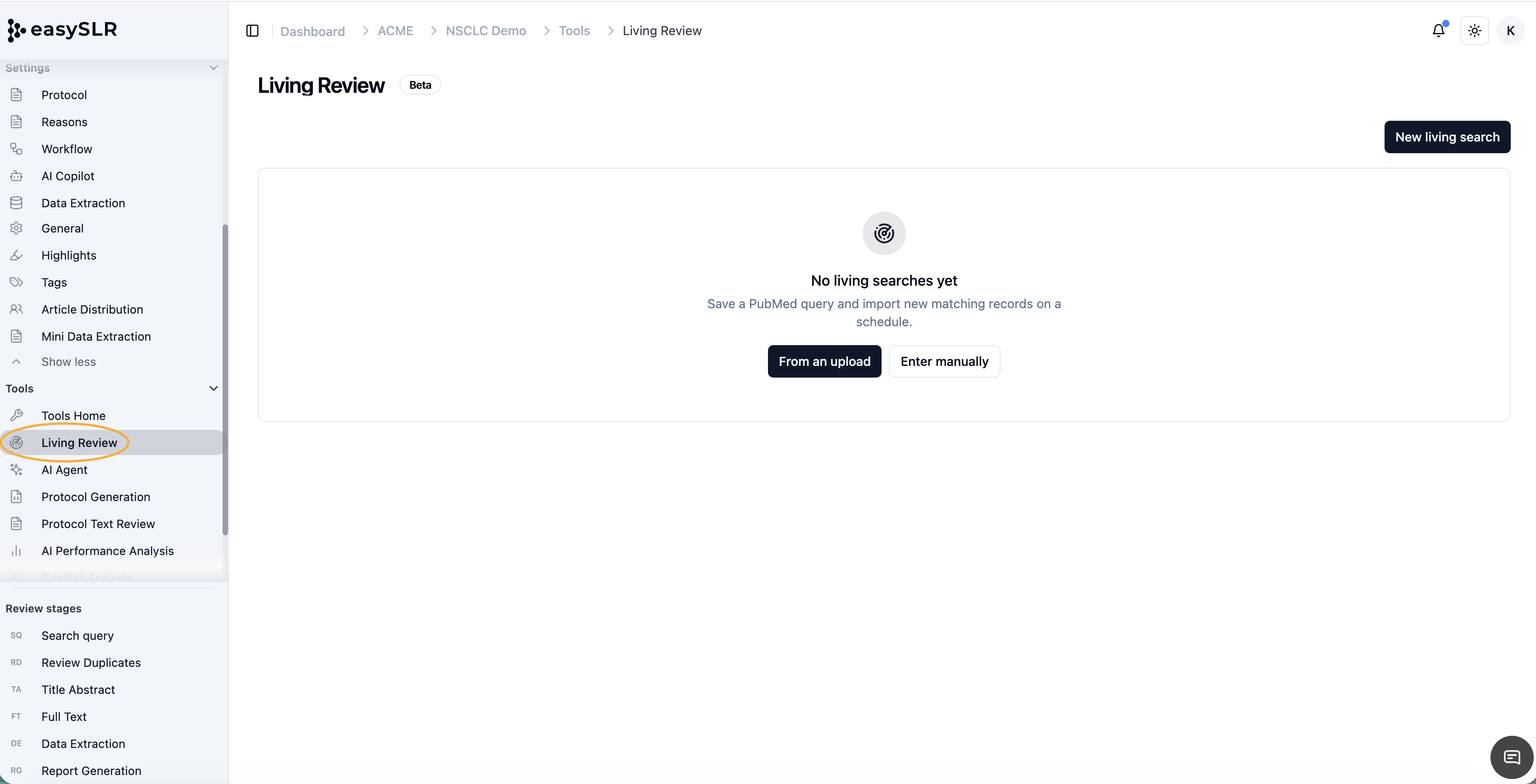
Click New Living Search.
Enter your search query.
Choose how frequently the search should run.
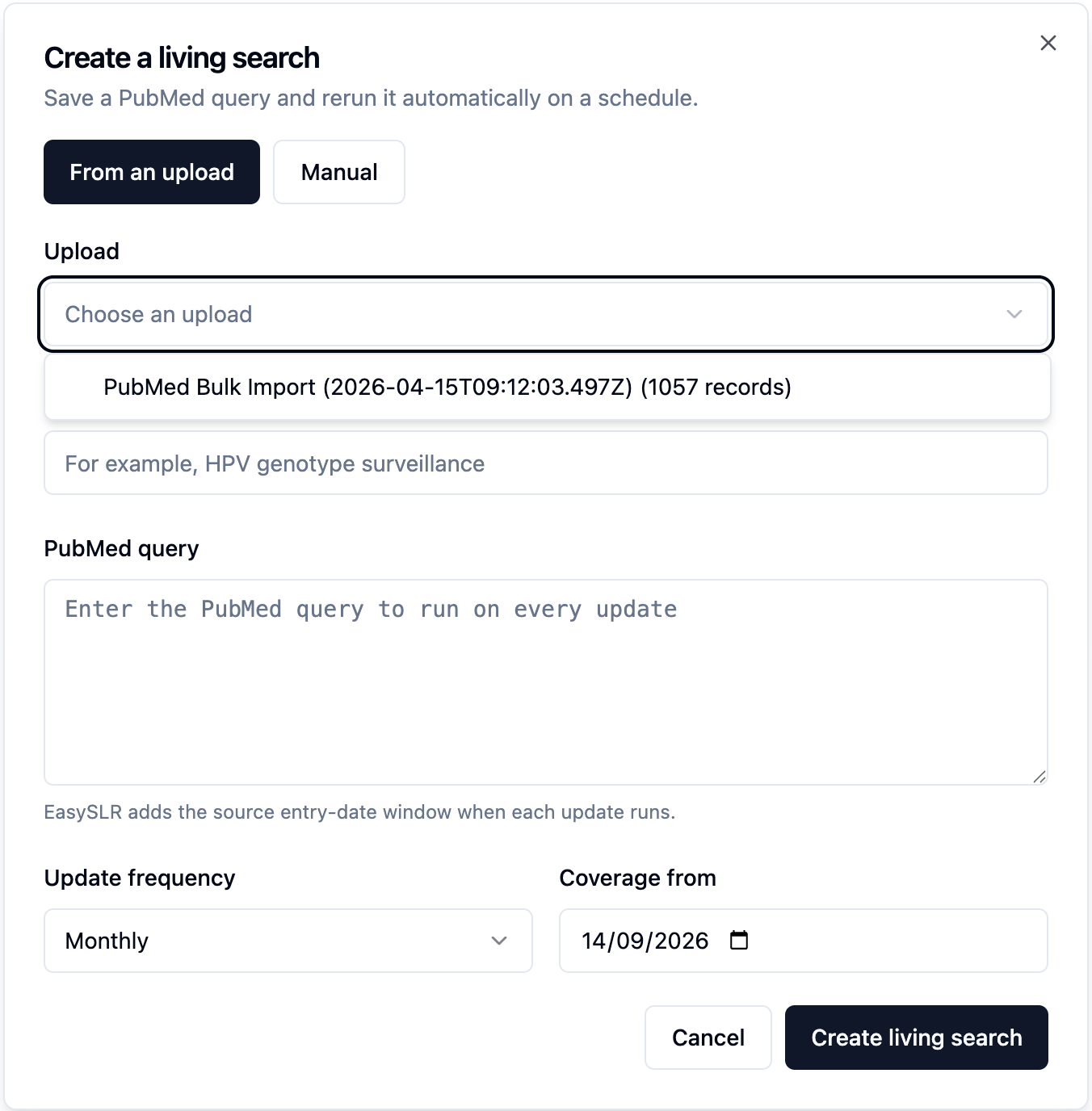
Review the details and create the search.
Once activated, EasySLR will run the search according to the selected frequency. You will receive an email notification when a scheduled search is completed, and newly identified records will be uploaded automatically to the project.
Reviewing Newly Added Records
Newly identified citations can be processed using the same workflow as the original review:
Review the newly uploaded records.
Complete title and abstract screening using the existing protocol.
Retrieve or upload PDFs for records progressing to full-text review.
Complete full-text screening.
Extract data from newly included studies using the configured forms.
Update the review findings and reports as required.
If AI is enabled for the relevant stages, it can assist with screening and data extraction using the project’s established criteria and configuration.
Key Benefits
Continuous monitoring: Regularly identify newly published evidence in PubMed.
Less manual work: Avoid repeatedly rerunning searches and importing results.
Consistent methodology: Apply the same protocol, screening criteria, and extraction forms to new evidence.
Faster updates: Use established manual or AI-assisted workflows to process newly added records.
Improved traceability: Maintain a clear record of scheduled searches, imported citations, and screening decisions.
Current findings: Keep evidence summaries and reports aligned with the latest available research.
Why It Matters
Literature reviews can quickly become outdated as new studies are published. Updating them traditionally requires teams to rerun searches, import results, identify duplicates, and repeat multiple workflow steps manually.
Living Search brings this process into the existing EasySLR projects. By automatically monitoring PubMed and adding newly identified records, it helps teams maintain current, consistent, and transparent reviews with less repetitive effort.