Automated Supplementary Discovery for Full-Text Articles
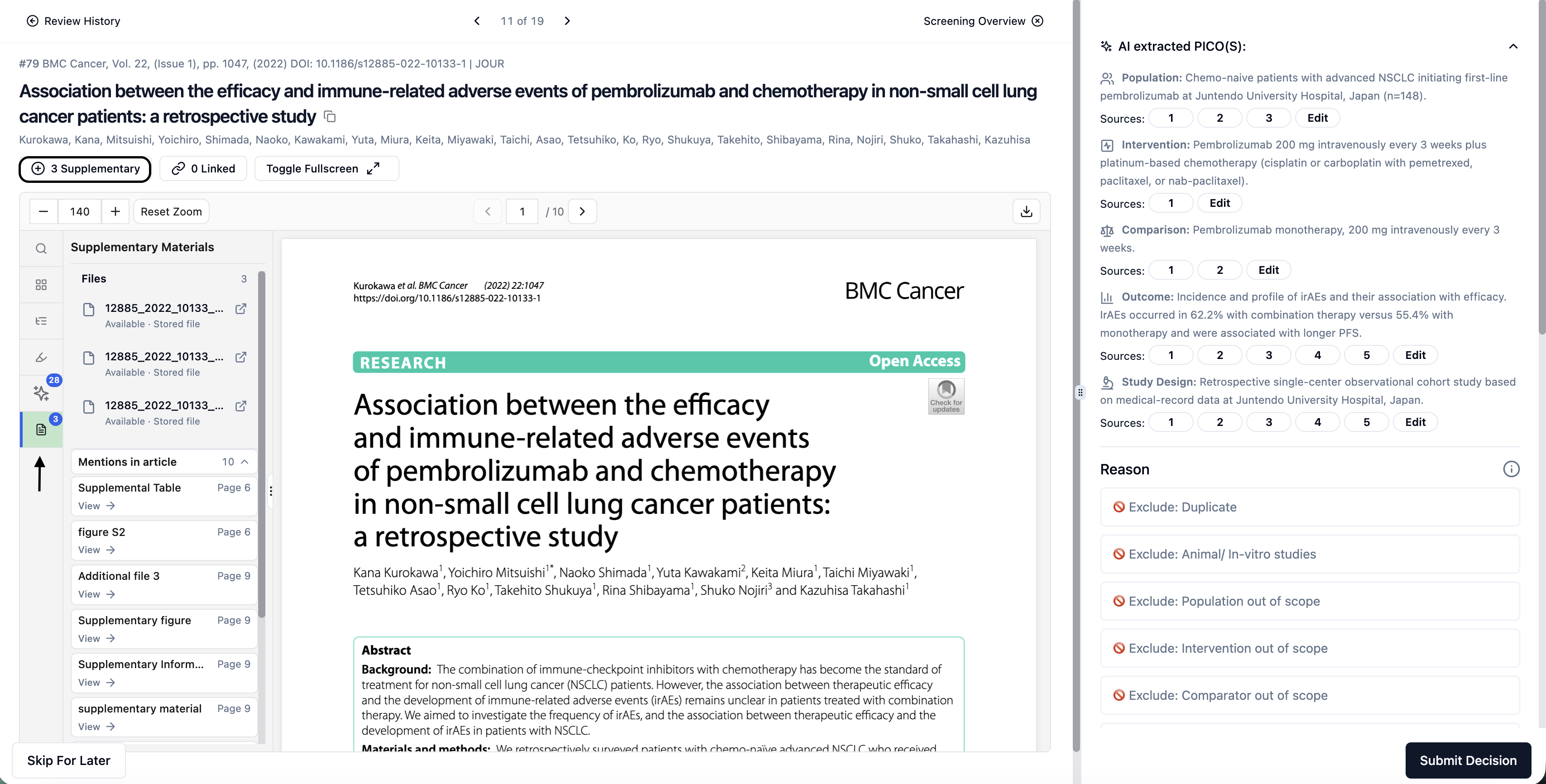
AI now automatically discovers supplementary files, retrieves freely available materials, and attaches them to the corresponding full-text article. Materials behind paywalls or requiring restricted access are not fetched automatically, but users can download and attach them manually if they have access. This helps reviewers access supporting information more easily while reducing the time and effort spent locating and organizing supplementary files.
How This Helps Reviewers
Reduces Manual Searching and File Management
Reviewers often need to search for supplementary files, download them, and upload them against the relevant article. Automating these steps saves time and allows reviewers to focus on assessing the evidence.
Supports More Thorough Article Assessment
Information relevant to a review may appear in supplementary materials rather than in the main article. These files may contain detailed methods, additional results, subgroup analyses, or supporting tables. Having them readily available helps reviewers assess the study more thoroughly and make better-informed decisions.
Helps Reviewers Find Relevant Extraction Data
Supplementary materials may include data that is missing or only summarized in the full text. Reviewers can consult the attached files to locate additional details, check reported findings, and address gaps during data extraction.
Keeps Supporting Materials Organized
Each retrieved file is attached to its corresponding article, keeping the study’s main text and supplementary information together. This makes it easier for reviewers to revisit supporting evidence and for other team members to access the same materials during verification or conflict resolution.